Saturday, November 25, 2017

McKibben’s debut comic cli-fi caper novel carries an important message, writes Steve Pappas in a Vermont newspaper

McKibben’s debut cli-fi novel carries an important message


Even in fiction, Bill McKibben doesn’t stray from his message.


McKibben, a top national activist on the issue of climate change, has written several nonfiction books, among them his 1989 magnum opus "The End of Nature."

But “Radio Free Vermont: A Fable of Resistance” is his first foray into fictional storytelling in a literary genre.

It was released in early November, with a dedication on the Dedication Page to "Spunky Knowsalot," most likely said to be the author's wife, the writer Sue Halpern,
is getting high praise among critics for its creative approach to storytelling.

“I’ve been working on this for years, little bits at a time,” McKibben said from his mobile phone in a subway in San Francisco, there to attend a conference. “It helped me to keep myself amused and sane in the midst of pretending to be an organizer.”

Almost 10 years, in fact.

The story focuses on 72-yearold Vern Barclay, the host of Radio Free Vermont, an underground radio station that advocates for Vermont to secede from the United States and operate as a free local economy. The debate that ensues is, as expected, very Vermont.

“This seemed like the year to publish it, because everybody I know has been downcast … (President) Trump has been the reverse Prozac, leaving everybody sad or anxious. … Instead of my usual, depressing, grim fare, I thought maybe I should publish something fun and hopeful,” McKibben said.


 “This is kind of a love letter to the resistance I have worked with for the last 10 or 12 years, and has really burgeoned this year.”


The story is also a love letter to Vermont. As the plot twists and turns, McKibben points to the things that make the Green Mountain State unique. Heintroduces readers to Ethan Allen, Town Meeting Day, country stores and one-room schoolhouses. He mentions local newspapers, Grace Potter, craft beer breweries and even the Tunbridge Fair a few times. There are trust-funders and old-timers, progressives, radicals and rallying cries toward activism at many levels. “It’s very much a Vermont story,” he said.

McKibben said working on the book kept him grounded, too.

“One thing that makes me sad is that I don’t get to spend as much time in Vermont as I would like,” he said.

So working on the novel while he traveled the globe for talks and conferences “was a bit like going home each time.… Much of this was written on the road, so it got my head back in a place where I wanted to be.”

What was the switch like going from being fact-based in making his points to making up a story?


Not so hard., he told this reporter on the phone. His first job directly after graduating to Harvard, obviously using his VIP elistist Harvard connections as a ''Harvard Man'' to get the gig, was writing the ''Talk of the Town'' section for the VIP elitist New Yorker magazine. It allowed him to flex a writing muscle that he has wanted to use again. “It was great fun. I was spending most of my time finding quirky New Yorkers and writing little profiles about them.”

Some of those quirky characteristics carry over into “Radio Free Vermont.”

“It turns out there is a lot of that in fiction, but just making up the interviews with interesting people,” he said.

McKibben’s 1989 nonfiction tome “The End of Nature” was a book for a general audience about climate change. Since then, he has written a dozen other books, including “Eaarth” and “Oil and Honey.” His group, 350.org, which he co-founded with a group of students, is a grass-roots climate change movement, which launched the fast-growing fossil fuel divestment movement.

If he ever gets more free time (“the climate fight might keep demanding too much time,” he said), McKibben might consider writing more climate fiction. “I do entertain some personal fantasies of someday 'retiring' from full-time 350.org climate organising, sitting on my screened porch in Ripton and doing more fun kinds of writing.”

Steven.Pappas@timesargus.com

Steven M. Pappas is the editor of The Times Argus and Rutland Herald. He can be reached at steven. pappas@timesargus.com

Leave a Reply

Your email address will not be published. Required fields are marked *


Friday, November 24, 2017

"We all live in the yellow Anthrocene, the yellow Anthrocene, the yellow Anthrocene....'' -- a climate protest anthem . If you like the tune and words -- "the mean streets of the Anthrocene" -- spread it around. No copyright.


 "We all live in the yellow Anthrocene, the yellow Anthrocene, the yellow Anthrocene....'' -- a climate protest anthem .  If you like the tune and words -- "the mean streets of the Anthrocene" -- spread it around. No copyright.  https://cli-fi-books.blogspot.tw/2017/11/we-all-live-in-yellow-anthrocene.html


When the Beatles released the song "Yellow Submarine" in 1966, they never imagined that it would live on in the culture at large for another 50 years or so, and maybe more.


You know the tune. Everyone does, worldwide.


In 1980, John Lennon talked about the song, explaining: "'Yellow Submarine' was Paul's baby. Donovan helped with the lyrics. I helped with the lyrics, too. We virtually made the track come alive in the studio, but based on Paul's inspiration. Paul's idea. Paul's title, and written for Ringo."


Paul McCartney put it this way: "It's a happy place, that's all. You know, it was just that we were trying to write a children's song. That was the basic idea. And there's nothing more to be read into it than there is in the lyrics of any children's song."


 "We all live in the yellow Anthrocene, the yellow Anthrocene, the yellow Anthrocene....'' -- a climate protest anthem .  If you like the tune and words -- "the mean streets of the Anthrocene" -- spread it around. No copyright.  https://cli-fi-books.blogspot.tw/2017/11/we-all-live-in-yellow-anthrocene.html


Now a 70-year-old climate activist, with a deep concern with how the climate debates are playing out worldwide in a divided world, where climate activists and climate denialists fight over worldviews and religion and language, has created a climate protest anthem to be be used a sing-a-long activity during future climate protests in world capitals and at future UN climate conferences. He titled it "We all live in the yellow Anthrocene" and it's based on the melody of the 1966 Beatles song, with the lyrics changed to reflect the challenging times we live in now in the Anthropocene.


Notice that the word used by most academics and newspaper reporters today is "Anthropocene" with four syllables. But for the purposes of the song itself in 2017, the song writer used the shorter three-syllable word "Anthrocene" (which means the same thing, and was in fact coined by science writer Andrew C. Revkin in a book he wrote in 1992, long before the longer word was taken up by scientists around the world.)


So here's the song, just three-minutes or so, and it's not meant so much for listening as for singing out loud at climate protest events. Perhaps someone like Bill McKibben of the 350.org group will lead protesters in singing it outside the White House in future years. It's an anthem for our time, and it's not a children's song anymore. It's for real, and it's meant to galvanize people into action and to reflect on just what it's like to live in the Anthropocene now.


SONG LINK

Thursday, November 23, 2017

Disfigured Taiwanese man overcomes discrimination through the art of pottery


HAPPY NEWS

Disgifured Taiwanese man overcomes discrimination through the art of pottery

By Huang Ming-tang and William Hetherington  /  Staff reporter, with staff writer

Bunun pottery artist Chiang Chun-hsiang in TAIWAN poses next to his work at a recent exhibition of his work in Taitung

Photo: Huang Ming-tang, Taipei Times


Art has helped a 41-year-old man from Taitung County overcome the discrimination he has encountered due to pervasive lipoma — a condition resulting in benign tumors composed of body fat.


Chiang Chun-hsiang (江俊祥), who began his study of pottery in May, described his introduction to the art as a life-changing incident.


His work was recently displayed at an exhibition by professional potter Zudweyi Ruvaniyao, a Paiwan Aborigine.
The glossy monotone surfaces of his work reflect his longing for smooth skin, Chiang said, adding that pottery has enabled him to live a happier life.
Chiang said the tumors began to appear all over his body when he was 10.
He has had surgery to remove the tumors, but they kept growing back, he added.
The tumors have been a constant source of stares and misunderstanding, especially from children who often say things like, “How scary, he is covered in pimples,” Chiang said.
A woman bumped into him at a supermarket and then yelled at him, he said.
“There was even one time when I was kicked out of a buffet restaurant because the owner thought I would scare off other customers. I had to have a friend go and get food for me,” Chiang said.
Chiang, a Bunun from Yanping Township (延平), said he has always had great difficulty finding work and was often forced to earn money harvesting pineapples.
“However, the work can be painful. My skin becomes unbearably itchy when I stay in the sun for too long,” Chiang said.
Chiang said it was not until this year that things changed when he met Hu Mei-fang (胡梅芳), an employment agency worker who introduced him to pottery.
Hu met with Zudweyi, who has been teaching pottery to 20-student classes for the past three years.
Zudweyi hired Chiang and another Bunun, Hu Yi-ran (胡依然), as his first studio assistants.
Hu Yi-ran had been giving Chiang rides to the studio every day, and after he died due to an illness, Zudweyi provided Chiang with housing near the studio so he could continue working.
“Chiang’s work is very special. His pieces are smooth and simple — they reflect the artist’s inner desires,” Zudweyi said, adding that Chiang needs only space and resources to produce work of exceptional quality.
Chiang said he is no longer affected by comments from strangers, adding that he tells people: “Do not look at me, look at my works.”
Chiang was one of three artists highlighted at a recent exhibition held by the National Taitung Living Art Center, where more than 10 of his pieces were displayed.
Chiang appeared at the exhibition to introduce his works.


This story has been viewed 1550 times.

Two new global cli-fi films outside the USA are making waves among movie fans with a concern for global warming impact events in the future


PETER on Twitter tells me:


News about'' QEDA'' from Denmark
 [and '' KADVI HAWA'' [BITTER AIR]
 from India]


"Watching the new Danish cli-fi movie titled '''' tonite, in which the main character undergoes molecular fission to save the planet.''


His exact tweet! Thank you for the heads-up Peter Liljenberg!


More and more people are using the cli-fi term in daily conversations online. Which is important and vital in spreading the meme worldwide and getting more people to pay attention to this important new genre of literature and cinema.


HAT TIP TO Peter Liljenberg @pliljan          


Later in the week, cli-fi novelist Liz Jensen (RAPTURE) in Denmark told me she had not seen ''QEDA'' yet.....but a few days later she emailed me and said:


"Just saw QEDA last night and it’s brilliant. Watch it if you can. It’s just what cli-fi should be doing.''


So QEDA. Here is a trailer and you can find more info about it online.


INFO about QEDA on IMDB movie data base:
http://www.imdb.com/title/tt6041362/plotsummary?ref_=tt_ov_pl


TRAILER: https://www.youtube.com/watch?v=DqrBB95p4HA


The year is 2095 in the new cli-fi movie QEDA from Denmark. The world is ravaged by ecological disaster. Oceans have risen and all natural freshwater is gone. Fang Rung has undergone molecular fission in order to send his other half, code name Gordon Thomas, back in time to the year 2017. Gordon goes in search of scientist Mona Lindkvist whose ground-breaking research was lost before it could save the world. When Fang Rung loses contact with Gordon he sees no alternative but to travel back to 2017 himself trying to locate his other half before the world's balances are irreparably damaged. It's a race against time for Fang Rung to save himself and the world.


News about
"KADVI HAWA'' [BITTER AIR]
 from India


Youtube trailer
https://www.youtube.com/watch?v=AjKsJfWxtsk


REVIEW from TIMES OF INDIA


Movie Reviews


Kadvi Hawa Movie Review by Times of India

Kadvi Hawa -- Movie Review

, TNN, Nov 21, 2017


Cast: Sanjay Mishra, Ranvir Shorey, Tillotama Shome, Bhupesh Singh
Director: Nila Madhab Panda
Genre: Cli-fi drama
Duration: 100 minutes
Story
In a village affected by climate change and scanty rainfall, a blind farmer strikes a deal with a debt recovery agent to save his son from a financial debt trap.

Review
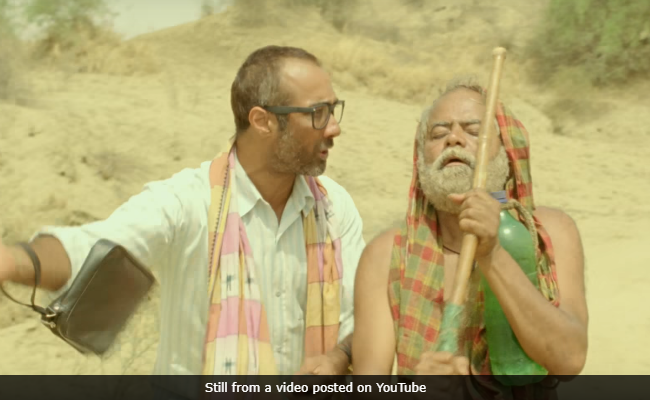
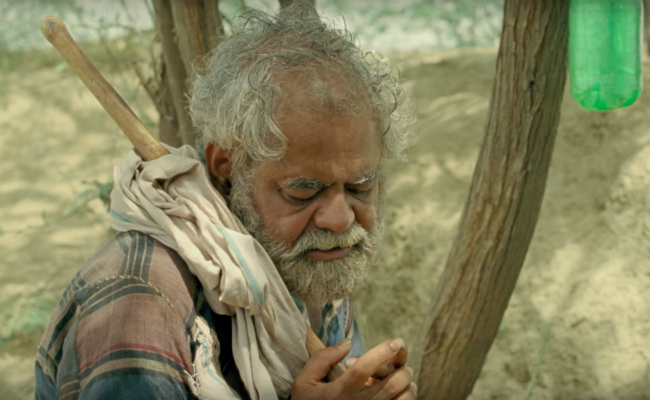
Gunu Baba (played by Ranvir Shorey) descends on the village of Mahua like ''a harbinger of death.'' As a loan recovery agent, whenever he goes to a village, he claims a few lives of the poor farmers as they commit suicide when they fail to pay back their loans. For this reason, they call him 'Yamdoot' which means ''messenger of death.'' A blind farmer Hedu (played by Sanjay Mishra) knows that his own son Mukund (played by Bhupesh Singh) owes a considerable amount to the lender. He can feel Mukund's depression and helplessness and is scared that one day he, too, will take his own life. So he lands up at the bank and asks Gunu to waive-off the loan. But that's like asking a lion to live off grass. However, one day, Hedu comes up with a plan wherein he tips-off Gunu whenever any of his fellow, debt-ridden farmers comes across some money. This way, Gunu will know just exactly whom to approach to clear his debt. This is a tough choice for Hedu to make; turning against his fellow villagers. But with his crop failing this year again, morals can be put on a hold for survival. In fact, he starts to give bigger tips when he senses his son is sinking further into depression. The question then is, how far will he go on with the scheming? Will the weight of the guilt ever get too heavy?

Ranvir Shorey as a villain appears all too human when you understand just why he is choosing to do what he does. With a thick Odiya accent and a permanent scowl on his face, he carries of his role well. Sanjay Mishra, too, is effortless in his role of a blind, worldly-wise old man. This may be one of the best performances he has given, as he hops around on his stick thinking ways of getting his son out of the conundrum. With his dhoti and bedraggled look, just like the film's poster, he blends into the landscape. What's nice about the film is that filmmaker/director  Mr. Nila Madhab Panda never tries to shove global warming in your face. He shows how, the changes happen gradually, like a failing crop. But the effects of it, like the loan a farmer takes, linger on.

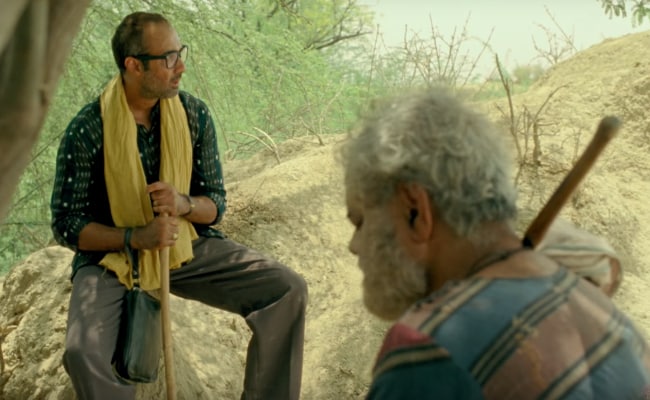
The chemistry between Ranveer and Sanjay is darkly entertaining. You may even feel guilty while enjoying a moment of black humour in scenes between the two actors.

With powerful dialogues by Nitin Dixit and achingly beautiful lyrics by Mukta Bhatt, the film is an engrossing watch. For a serious cli-fi film about global warming issues, ''Kadvi Hawa'' is non-preachy and entirely watchable.


=============


Kadvi Hawa Movie Review: Ranvir Shorey Matches Incredibly Impactful Sanjay Mishra

Kadvi Hawa Movie Review: Sanjay Mishra and Ranvir Shorey's film is delivered without any sugar-coating

153 Shares
EMAIL
PRINT
COMMENTS
Kadvi Hawa Movie Review: Ranvir Shorey Matches Incredibly Impactful Sanjay Mishra
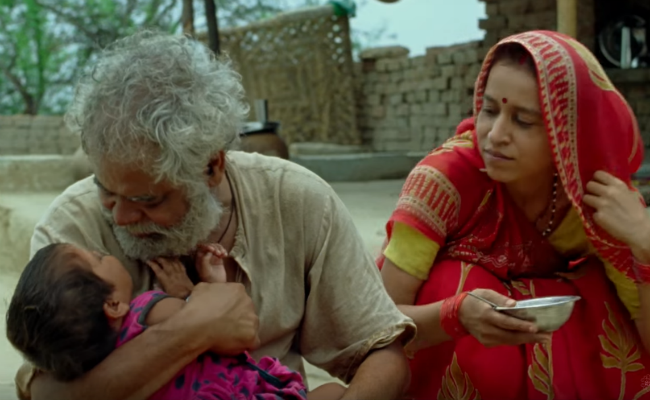
Sanjay Misra and Ranvir Shorey in a still from Kadvi Hawa.
Cast: Sanjay Mishra, Ranvir Shorey, Tillotama Shome, Bhupesh Singh, Ekta Sawant
Director: Nila Madhab Panda
Rating: 3.5 Stars (out of 5)

Nila Madhab Panda's Kadvi Hawa is a pill so bitter that no palliative can lessen the sharp aftertaste that it leaves. And that is precisely what this film is meant to do: force the audience to think long and hard about the dangers that lie ahead of mankind if climate change isn't taken seriously and addressed on a war footing at all levels. Delivered without any sugar-coating, Kadvi Hawa blows the lid off our collective indifference to the worsening impact of wobbly weather systems on lives and livelihoods in ecologically vulnerable regions.
 
kadvi hawa review youtube
Kadvi Hawa Movie Review: Sanjay Mishra in a film still.
Notwithstanding the slight hint of humour that the screenplay occasionally injects into this story about severely ravaged communities, it is a film that pulls no punches in painting a disturbingly dark picture of the human cost of the cavalier collective disregard of the continuing depletion of finite natural resources.

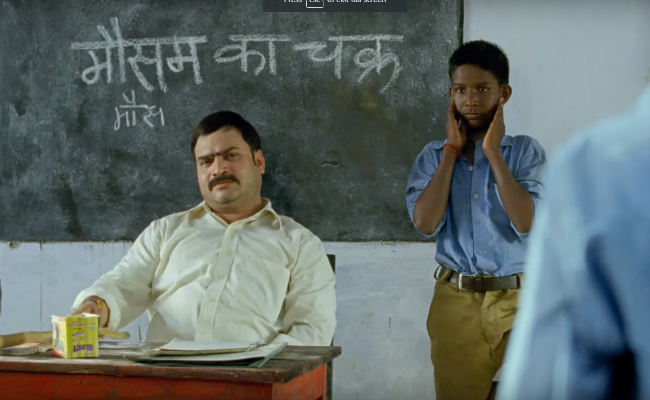
In one scene, a teacher asks a school student how many seasons there are. "Summer and winter," the boy answers. What about the monsoon? "It does rain two or three days a year, sometimes in winter, sometimes in summer," he replies, provoking peals of laughter from his classmates. It is the chilling truth and we know all too well that the scarcity of rain is no laughing matter.
 
kadvi hawa review youtube
Kadvi Hawa Movie Review: A still from the film.

Kadvi Hawa, shot on Super 16mm film that significantly accentuates the forbidding starkness of the landscape, delivers its cautionary tale with an unsettling air of urgency, which is heightened by the sheer power of a brilliant performance from Sanjay Mishra, who fleshes out the character of a sightless old man who, worried for his debt-ridden farmer-son and his family, strikes a deal with a pitiless man who, for the people of this village located off Dholpur, near Agra, is the Devil himself.

But as it turns out, the 'God of Death', who must do his job come what may as a loan recovery agent sent to this rain-deficient region to arm-twist farmers into clearing their outstanding debts, is himself a victim of the fury of nature unleashed by the sea in his native Kendrapara, Odisha. This character is played with energy and precision by Ranvir Shorey, who matches the incredibly impactful Mishra, moment for moment.

The two superlative performances lend Kadvi Hawa its heft. The director does not take recourse to over-dramatic means to convey the depth of despair that drives the two men into each other's orbit in circumstances that are so fast spinning out of control. One thinks that the other could be of help, but neither really knows where their lives are headed. They are both equally at the mercy of the elements and of a system low on humanity.
 
kadvi hawa review youtube
Kadvi Hawa Movie Review: Sanjay Mishra and Ranvir Shorey in a film still.
There is, on the face of it, no earthly reason - or, perhaps, there is - for their paths to cross. Hedu, 70 years old, blind and palpably helpless, is instinctive, enterprising and proud of his identity as a farmer despite the grave misfortunes that have befallen him. He lives in an area that hasn't received any rain in ages. He is acutely alive to the need to find a way around his wretched destiny.

His brooding son Mukund (Bhupesh Singh) barely utters a word. The old man keeps a tab on him solely through his communication with his daughter-in-law Parvati (Tillotama Shome). His bonding with his elder granddaughter keeps him going, as does the time that he spends with a buffalo named Annapurna (provider of food), his constant companion. Hedu's peregrinations take him every day to the same dusty, barren spot from where he has a vantage view of the route that the adversarial bank collection agent takes to reach the village on his moped.
 
kadvi hawa review youtube
Kadvi Hawa Movie Review: Sanjay Mishra and Tillotama Shome in a film still.
This man, Gunu, an Odia who has opted to relocate to a place miles away from home solely because of the lure of a "double commission" on every recovery on behalf of his bank, is bent upon forcing the 30-odd defaulting farmers of the village Mahua to pay up so that he can one day make enough money to return to his part of the world and move his family - a widowed mother, wife and two daughters - to a safer place.

Gunu's coastal village, we learn some way into the film, was wiped off the face of the earth by the sea, taking his father along to a watery grave. His distraught mother is left living in hope that her husband will return someday. Gunu's move to the drought-prone Bundelkhand is an act of self-preservation that reeks of extreme duress.


Kadvi Hawa takes several problems in its limited sweep - climate change, extreme weather conditions, the agrarian crisis, farmer suicides and the insensitivity of the banking system - without wavering in its primary focus. It reveals the sheer magnitude of the environmental disasters that stare us in the face through the 'eyes' of a wizened and innately wise man who cannot 'see' but feels and knows the enormity of the challenges ahead as much as through the scalded conscience of a 'heartless' bank employee who pursues his quarries with the dourness of a bloodhound.

On the odd occasion, the film seems to flag a wee bit because the intimate tale of two blighted families has inevitably to be stretched to accommodate the ambitious span of the portrait that the filmmaker wants to present of the havoc that rain can play when there isn't enough of it just as when there is too much of it. Yet, owing to the clarity of the vision that powers the film, Kadvi Hawa hits home with the force of a gale. It is designed to provoke contemplation and action, a mission that it achieves without any serious slips. Watch it because it is an important film that offers an essential takeaway.


Wednesday, November 22, 2017

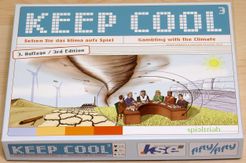
Some board games for cli-fi writers and game designers to explore -- (hat tip to Redsheep Shen in Taiwan)


https://www.boardgamegeek.com/boardgame/14698/keep-cool


and


https://www.boardgamegeek.com/boardgame/72225/co


With Keep Cool, each player takes a role within global climate politics. You have to put through economic interests – e.g., of the USA and its partners or of the Developing Countries – yet you must not forget the strong lobby groups in your country like the oil industry or environmental groups as they also decide whether you win or lose. Within each round of the game you have to decide between measures for climate protection good for all and egoistic decisions just for your own sake. The risk: catastrophes like droughts, floods or pandemics. The chance: welfare and a stable global climate. Whoever reaches his targets first wins, yet if you are not cooperative enough all players might lose due to a collapse of the world climate


CO2 GAME: In the 1970s, the governments of the world faced unprecedented demand for energy, and polluting power plants were built everywhere in order to meet that demand. Year after year, the pollution they generate increases, and nobody has done anything to reduce it. Now, the impact of this pollution has become too great, and humanity is starting to realize that we must meet our energy demands through clean sources of energy. Companies with expertise in clean, sustainable energy are called in to propose projects that will provide the required energy without polluting the environment. Regional governments are eager to fund these projects, and to invest in their implementation.
If the pollution isn't stopped, it's game over for all of us.
In the game CO₂, each player is the CEO of an energy company responding to government requests for new, green power plants. The goal is to stop the increase of pollution, while meeting the rising demand for sustainable energy — and of course profiting from doing so. You will need enough expertise, money, and resources to build these clean power plants. Energy summits will promote global awareness, and allow companies to share a little of their expertise, while learning still more from others.
In CO₂, each region starts with a certain number of Carbon Emissions Permits (CEPs) at its disposal. These CEPs are granted by the United Nations, and they must be spent whenever the region needs to install the energy infrastructure for a project, or to construct a fossil fuel power plant. CEPs can be bought and sold on a market, and their price fluctuates throughout the game. You will want to try to maintain control over the CEPs.
Money, CEPs, Green Power Plants that you've built, UN Goals you've completed, Company Goals you've met, and Expertise you've gained all give you Victory Points (VPs), which represent your Company's reputation – and having the best reputation is the goal of the game ... in addition to saving the planet, of course.


Gameplay

  • 36 Players
  • Time: ––

    (Not provided by publisher)
  • Age: 9+
  • Weight: –– 2.00 / 5


Edit Admin Edit


Description


Additional Suggestions

  • Language Dependence
    (no votes)

BGG Item ID: 14698